October 19, 2026

Group of African kids learning together
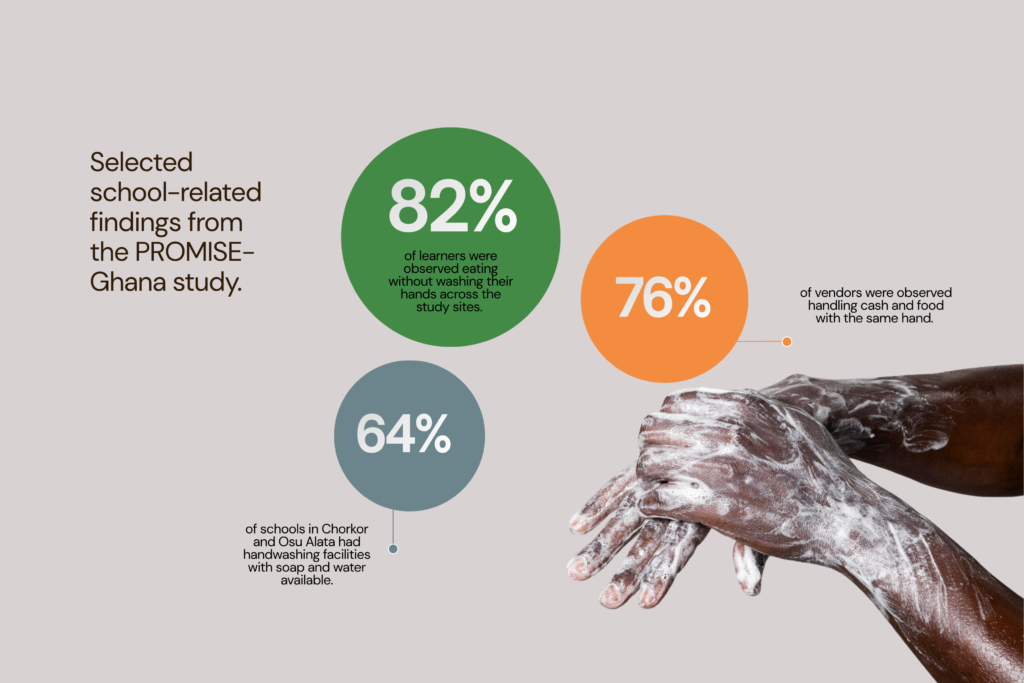
More than eight in ten learners observed across four urban communities in Ghana ate without washing their hands, while 76% of food vendors were observed handling money and food with the same hand. These findings from the PROMISE-Ghana Food Safety and Hygiene Study reveal how everyday practices around school meals can expose children to contamination, even where basic water, sanitation and hygiene facilities exist.
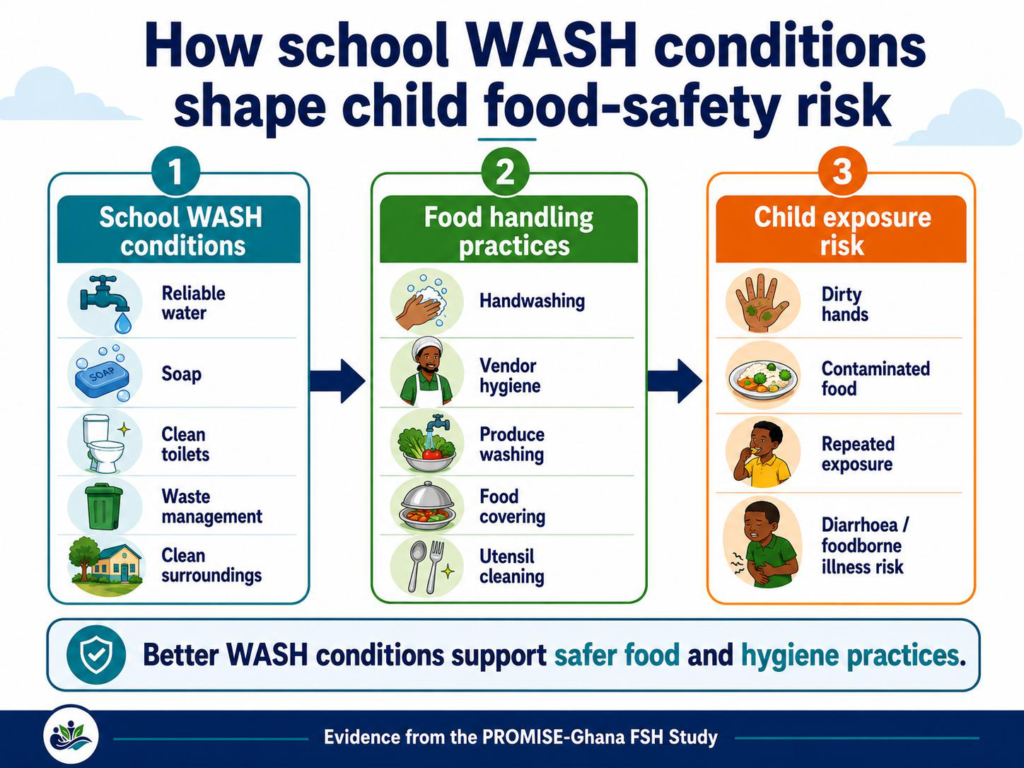
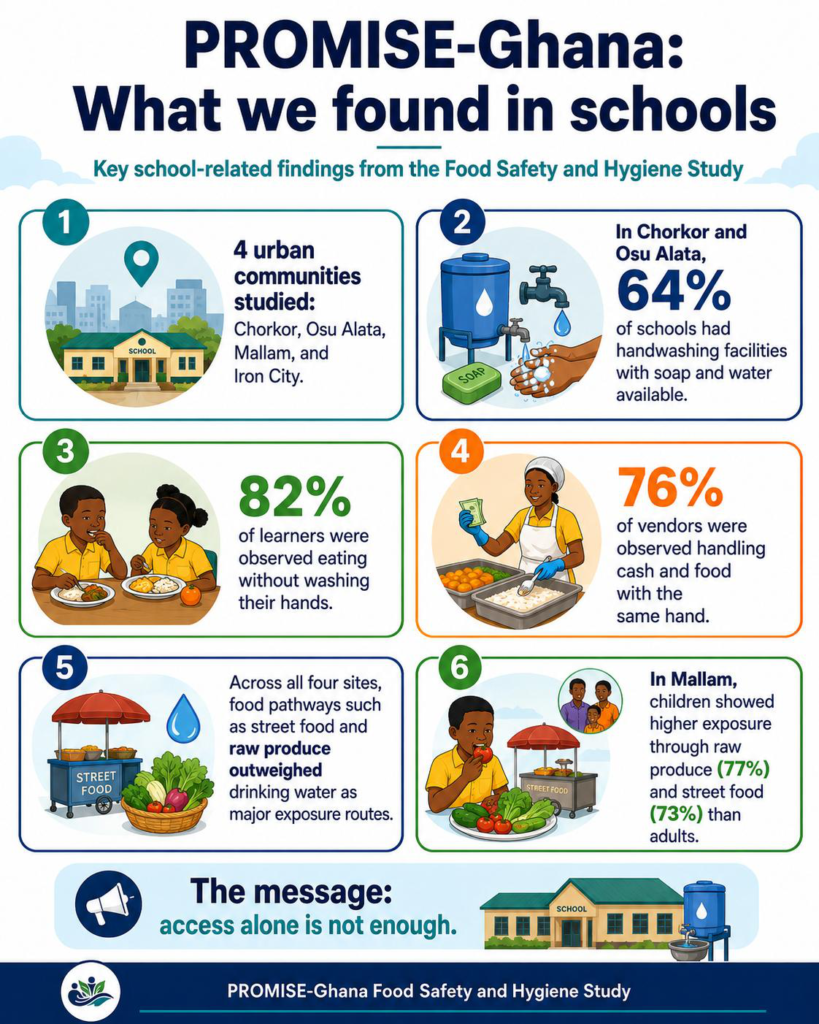
The research, conducted between March 2024 and June 2026 in Chorkor, Osu Alata, Mallam and Iron City, examined how children and other community members encounter potential faecal contamination through food, water and their surroundings. It found that the safety of school meals depends not only on food preparation and handling, but also on reliable water supplies, clean toilets, waste management, the condition of vending areas and the hygiene practices children and vendors can realistically maintain.
In Chorkor and Osu Alata, 64% of schools had handwashing facilities with soap and water available. Yet observations across the study sites showed that access to facilities did not consistently translate into handwashing before meals. The findings raise questions about how schools and public health authorities assess hygiene conditions and whether investments in infrastructure are accompanied by the supplies, maintenance and daily supervision needed to make facilities useful.
For children who regularly purchase food from informal vendors, these conditions extend beyond the school compound. The markets, roadside stalls and food preparation areas surrounding schools form part of the environment in which children eat, making food safety a shared responsibility among schools, vendors, communities and municipal authorities.
Purchasing food from vendors is part of the school day for many children in the communities studied. Meals and snacks sold within and around school compounds provide accessible and affordable options, particularly where schools do not have established feeding arrangements.
In Chorkor, schoolchildren were among the major consumers of street food, alongside fish processors and low-income households. Residents purchased an average of 2.6 vendor meals per person daily, illustrating the importance of informal food vending to everyday food access. In Osu Alata, traders, artisans and schoolchildren purchased an average of 2.3 vendor meals daily.
A head teacher in Osu Alata explained why children depended on food sold outside school.
“We don’t have a feeding caterer, so students buy food outside.”
Where formal feeding arrangements are unavailable or limited, schools have less direct control over the conditions under which children’s meals are prepared and sold. The safety of those meals depends heavily on the hygiene practices of informal vendors and the surrounding environment.
In Mallam, more than half of households reported that children consumed food from street vendors. Learners preferred inexpensive and filling foods, while peer influence shaped their purchasing decisions. Some continued buying food even when hygiene conditions appeared poor.
These patterns place informal food vendors at the centre of school food safety. Their services meet an everyday need, but the conditions in which they operate can also influence children’s exposure to contamination.
The PROMISE-Ghana study examined more than the availability of toilets, handwashing facilities and drinking water. Researchers used the SaniPath approach alongside qualitative and quantitative methods to investigate potential faecal exposure across households, schools, markets and surrounding communities.
The research drew on interviews, focus group discussions, market surveys, exposure assessments and institutional reviews. It also examined the responsibilities of community actors and municipal institutions involved in environmental sanitation and food safety.
Across the four study communities, food emerged as a major pathway of potential exposure, reflecting how frequently people consumed street food and raw produce and the contamination risks associated with these activities.
In Chorkor, more than 60–70% of adults and children frequently consumed street food and raw produce, often six or more times each week. By comparison, 81% of children reported that they had not consumed municipal drinking water directly during the preceding week. Researchers identified food pathways as a greater source of faecal exposure because of their frequency and associated contamination risks.
Similar patterns emerged in Osu Alata, where food-related exposures outweighed drinking-water risks, particularly among children.
In Iron City, street food was the most frequent exposure pathway. Children purchased snacks and meals several times during school hours, increasing opportunities for repeated exposure. Vendors operating near open drains, refuse sites and dusty surroundings faced additional environmental hygiene challenges.
The Mallam findings showed that children experienced higher reported exposure through raw produce and street food than adults. Exposure through raw produce was reported at 77% among children compared with 74% among adults, while the corresponding figures for street food were 73% and 68%.
The frequency of these activities helps explain why food safety deserves greater attention in school WASH programming. Drinking water remains essential, but interventions focused primarily on water supplies and sanitation facilities may overlook other important routes through which children encounter faecal contamination.
The study also examined the relationship between hygiene knowledge, available facilities and everyday behaviour.
Although 64% of schools in Chorkor and Osu Alata had handwashing facilities with soap and water available, observations across the study sites found that 82% of learners ate without washing their hands. Vendors handling cash and food with the same hand were observed at a rate of 76%, while routine handwashing between transactions was frequently absent.
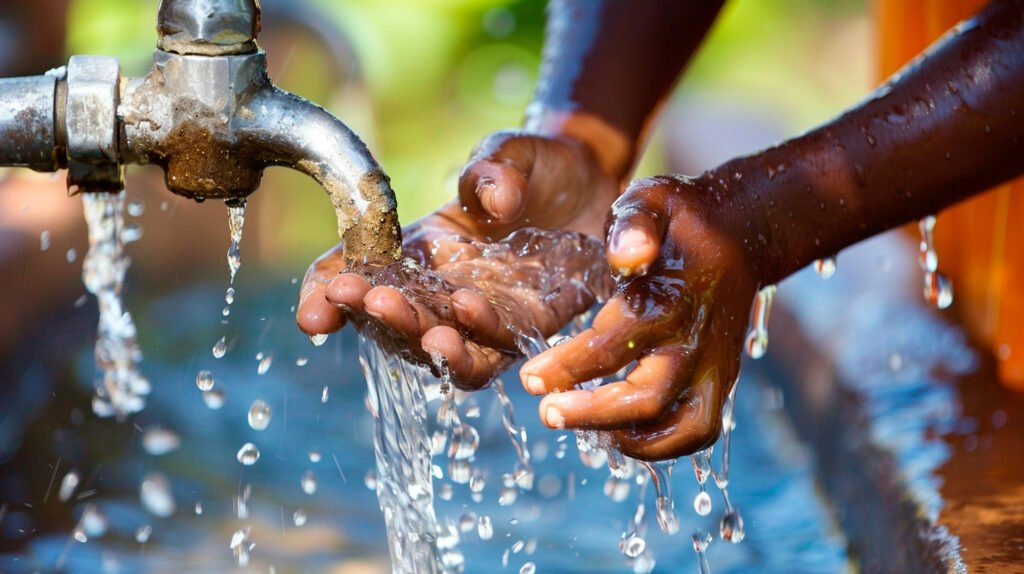
Soap was unavailable at many handwashing points, and unreliable water supplies further limited opportunities to practise good hygiene. Long queues and short school breaks could also discourage handwashing, particularly when facilities were inconveniently located.
A learner in Iron City described how children managed without soap.
“We don’t have soap in school; we just use sachet water before eating.”
The learner’s experience illustrates a practical limitation of hygiene education. Knowing when and why to wash hands does not ensure that children can do so. Water, soap, accessible facilities and sufficient time must be available when they are needed.
The same applies to vendors who handle food throughout the day. Safe practices depend on reliable water, appropriate food storage, clean preparation surfaces and opportunities to wash hands between transactions. Without these conditions, maintaining hygiene becomes difficult even where vendors understand the recommended practices.
For schools, the findings suggest that monitoring the existence of facilities is insufficient. Their functionality, accessibility, maintenance and consistent use are equally important measures of whether children can practise good hygiene.
Food handling practices were closely connected to the physical conditions in which vendors worked.
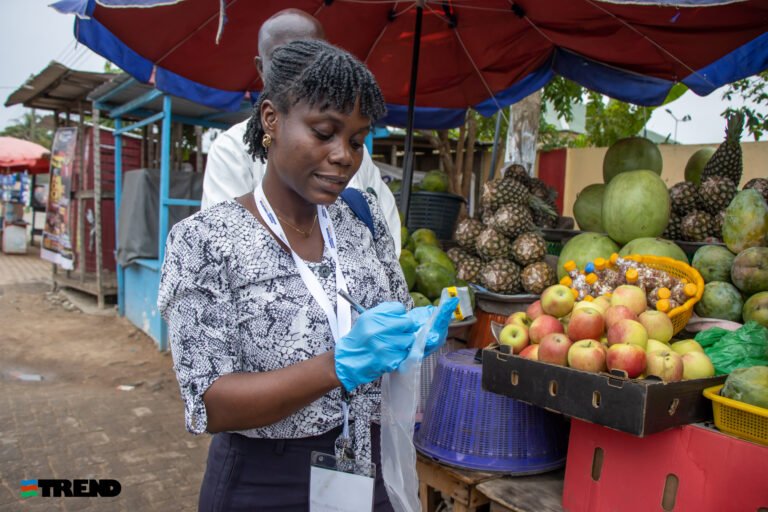
Across the study communities, researchers observed vending activities near open drains, refuse piles and dusty roads. Some food was displayed without adequate covering, while flies, pests and environmental contamination remained common concerns. Vendors frequently handled money and food during the same transactions.
In Chorkor, children also handled food and money directly, while some vendors operated close to gutters and stagnant drains. In Mallam, researchers identified risks associated with uncovered food, reused water, flies, dust and repeated handling of both money and food.
Environmental Health Officers in Osu Alata reported difficulties sustaining compliance with hygiene requirements beyond routine inspections. One officer described how vendors sometimes changed their practices when inspectors were present.
“We check that they cover food and use gloves, but after we leave, they stop.”
The account points to the limitations of inspections that establish compliance at a particular moment without sufficient follow-up or support to sustain safer practices.
In Iron City, school feeding caterers reported inadequate water access, poor waste disposal systems and limited handwashing facilities. Learners appreciated the availability of meals but expressed concerns about cleanliness in eating areas.
The experiences across these communities show that food safety cannot rest on individual behaviour alone. Vendors need appropriate working conditions, while schools and municipal authorities need systems that support routine hygiene, environmental sanitation and continued compliance.
The findings identify several opportunities for schools, public health authorities and food vendors to improve the conditions under which children purchase and consume food.
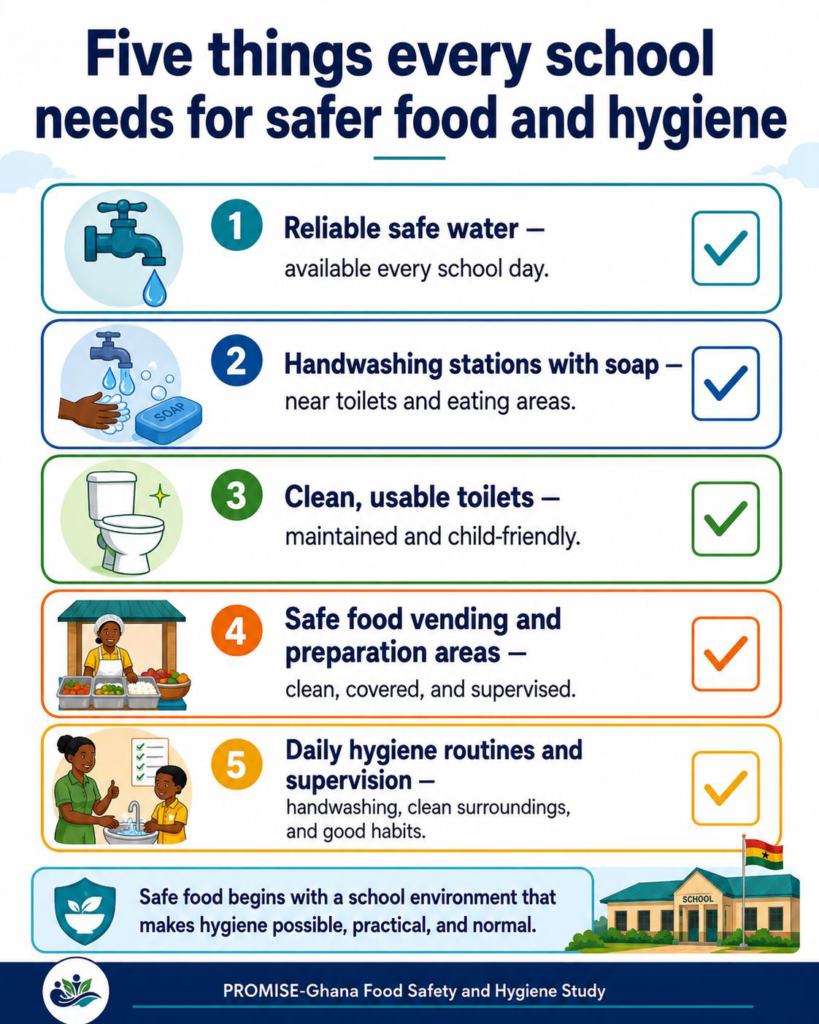
Schools can strengthen hygiene practices by ensuring that safe water and soap are consistently available and that handwashing facilities are conveniently located near toilets and eating areas. Clean, usable and child-friendly toilets, properly maintained surroundings and effective waste management are also necessary.
Teachers and school health programmes can reinforce these improvements by making handwashing before eating and after toilet use part of the daily school routine. Regular supervision and practical demonstrations can help children develop habits that extend beyond occasional hygiene awareness activities.
Food vendors need consistent inspection, coaching and practical support to improve food covering, preparation, water use and hygiene between transactions. Such support should respond to the conditions in which vendors operate, including the availability of water and appropriate waste disposal facilities.
Municipal Assemblies and Environmental Health Units also have an important responsibility to integrate school food environments into broader food safety planning and inspection systems. Coordination between schools and municipal authorities is especially important where children depend on vendors operating outside school premises.
Children can contribute to these improvements through their own practices and by encouraging safer hygiene among peers, families and communities. Their involvement can help make handwashing and food hygiene part of ordinary school life.
Across these responsibilities, the research identifies five conditions that schools need to support safer food and hygiene. These are reliable safe water, handwashing stations with soap, clean and usable toilets, hygienic food vending and preparation areas, and daily hygiene routines supported by supervision.
Each condition reinforces the others. A handwashing station without soap cannot reliably support hand hygiene. A vendor who understands safe food handling may still struggle to maintain it beside an open drain or without clean water. Hygiene education is less effective when the school environment does not allow children to practise what they learn.
The PROMISE-Ghana research brings school food safety into a broader discussion about sanitation, hygiene and environmental health. Its examination of food purchasing patterns, exposure pathways, institutional responsibilities and everyday practices provides evidence that schools and municipal authorities can use to strengthen interventions.
The findings also demonstrate why investments in WASH infrastructure need to be accompanied by maintenance, reliable supplies, practical supervision and sustained engagement with the people who use the facilities.
For the PROMISE Consortium, the research supports efforts to promote evidence-based investments in sanitation and hygiene that respond to the conditions people encounter in daily life. In Ghana’s school communities, this includes recognizing informal food vendors as part of the school food environment and ensuring that food safety receives appropriate attention alongside water and sanitation services.
A child’s exposure to contamination can be influenced by decisions made long before a meal is served, from the availability of water and soap to the management of waste and the cleanliness of food preparation areas. Improving these conditions together offers a practical opportunity to make school meals safer and strengthen public health protection for children.
About the research
This story draws on the PROMISE-Ghana Food Safety and Hygiene Study, conducted between March 2024 and June 2026 in Chorkor, Osu Alata, Mallam and Iron City. The study applied the SaniPath approach alongside qualitative and quantitative research, exposure assessments and institutional reviews.
The PROMISE-Ghana team is hosted by Training, Research and Networking for Development (TREND Group), working with national institutional partners and participating metropolitan and municipal assemblies.
Original research blog contributors
Ato Kwamena Senayah, Ilham K. Hamid, Edna K. Dapaah and Carol Antwi.
Participating local authorities
Accra Metropolitan Assembly, Korle Klottey Municipal Assembly, Weija-Gbawe Municipal Assembly and Awutu Senya East Municipal Assembly.