April 17, 2025

Members of the PROMISE Consortium pose for a group selfie in colourful, matching African-print attire during the 2025 Annual Workshop in Accra, Ghana.
The PROMISE Consortium has developed country-level plans to strengthen the use of research evidence in sanitation and hygiene policies, programmes and investments, following a five-day workshop that brought together researchers, government officials and development partners in Accra, Ghana.
The Consortium’s second annual workshop, held from 7 to 11 April 2025 at Alisa Hotel, examined how three public health decision-support tools, WASH FIT, SaniPath and COMPASS, can help institutions identify sanitation risks, prioritise interventions and allocate resources. Country teams also developed plans to apply the tools in healthcare facilities, communities and municipal sanitation systems.
Training, Research and Networking for Development (TREND) Group organised the workshop in collaboration with Ghana’s Ministry of Local Government, Chieftaincy and Religious Affairs. The meeting formed part of the work of the PROMISE Consortium, Promoting Evidence-Based Investments in Sanitation and Hygiene for Health and Equity, supported by the Gates Foundation and Reckitt Global Hygiene Institute (RGHI).
For local authorities, one challenge is obtaining reliable evidence to guide sanitation interventions. Mrs. Florence S. Kuukyi, Director of the Public Health Department at the Accra Metropolitan Assembly, described the difficulties municipal officials face in addressing food safety and hygiene risks.
“As a Metropolitan Assembly, we clearly see the challenges with food safety and hygiene in our communities. However, there is often no concrete evidence-based research to help fully support or visualize these issues. That’s why, this is a project we are ready to support for better planning for municipal health, especially around food safety and hygiene,” she said.
Mr. Kweku Quansah, Deputy Director in the Environmental Health and Sanitation Directorate at Ghana’s Ministry of Local Government, Chieftaincy and Religious Affairs, called for stronger regulation, monitoring and investment in sanitation, particularly in healthcare facilities, schools and food safety systems.
“We can no longer afford to treat sanitation as secondary. it is central to public health, dignity, and national development,” he said.
The availability of research evidence does not always guarantee its use in government decisions. Mrs. Vida Duti, Country Director of the International Rescue Committee (IRC) Ghana, pointed to differences between research timelines and government planning cycles, alongside institutional responsibilities that can delay implementation. She urged researchers to involve policymakers early and work through existing planning structures.
“If we want change that lasts, we must make research walk hand-in-hand with policy and practice,” she said.
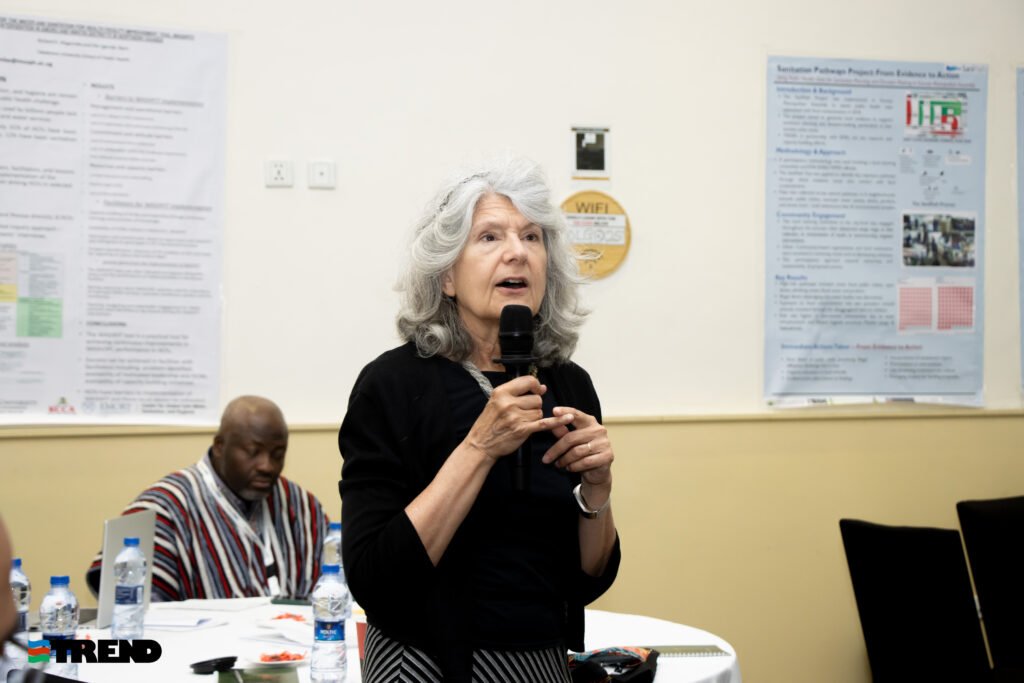
Prof. Christine L. Moe of Emory University presented the Consortium’s approach to strengthening sanitation decisions through research partnerships, technical training and engagement with policymakers. She explained how the tools can help institutions assess health risks and identify priorities for sanitation investment.
Mr. Habib Yakubu of Emory University demonstrated WASH FIT, a tool that helps healthcare facilities assess water, sanitation, hygiene and infection prevention conditions, identify gaps and monitor improvements.
Dr. Musa Manga of the University of North Carolina at Chapel Hill presented COMPASS, which assesses pathogen hazards across sanitation systems to guide investment priorities. Suraja Raj introduced SaniPath, which combines environmental contamination measurements with information on human behaviour to identify pathways of exposure to faecal contamination.
Country teams shared experiences applying the tools in different settings. Dr. Richard K. Mugambe of Makerere University School of Public Health presented Uganda’s experience with WASH FIT, focusing on environmental cleanliness and infection prevention in healthcare facilities.
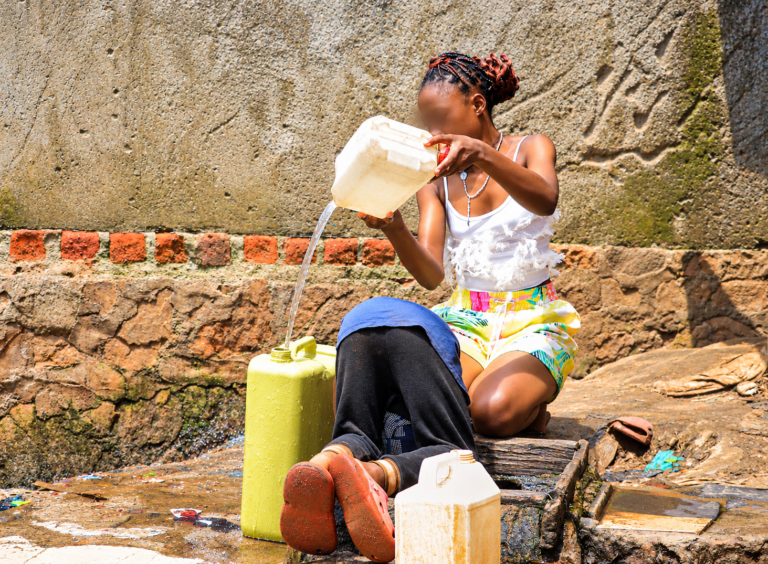
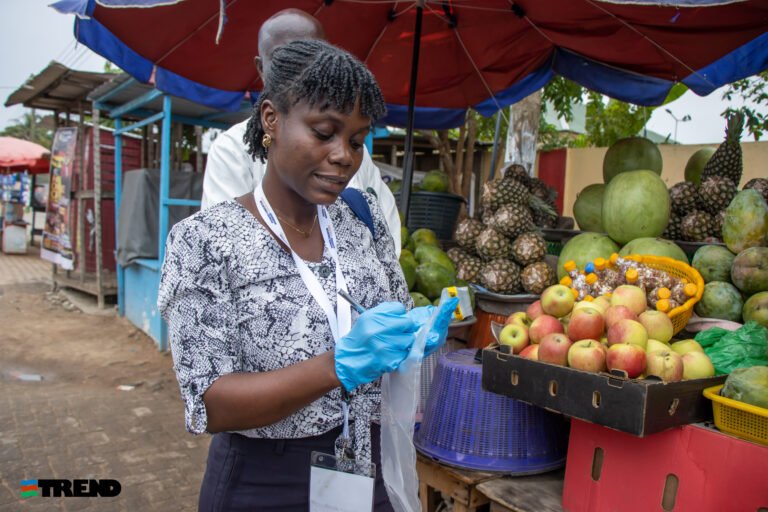
Participants also examined applications of the tools in Senegal, Ghana, Bangladesh, Tanzania, Kenya and Zambia. Field activities in Accra’s Jamestown and Korle Gonno communities, alongside laboratory demonstrations at the Water Research Institute, gave participants practical experience in environmental sampling and contamination assessment.
Welcoming participants, Mr. Eugene Larbi, Managing Director of TREND Group, called for stronger partnerships and practical approaches to using research evidence. He identified sustainability, gender-responsive sanitation and climate resilience among the priorities for participating institutions.
“This workshop is more than a gathering it’s a commitment to transform data into action, tools into solutions, and partnerships into lasting change for Ghana’s WASH future,” he said.
Jamie Nunn of RGHI, speaking on behalf of the Consortium’s funders, reaffirmed the Institute’s commitment to supporting research capacity and the application of scientific findings in public health decisions.
“Our investment is not just in projects; it’s in people, data, and decisions that create healthier communities,” he said.
By the end of the workshop, participating countries had outlined activities suited to their sanitation priorities and institutional needs.
Uganda proposed assessing environmental cleanliness in six healthcare facilities in Greater Kampala. Ghana developed plans for food hygiene and contamination assessments across four municipalities, while Senegal proposed WASH assessments in 12 health district facilities.
Bangladesh, Kenya, Tanzania and Zambia presented plans involving faecal exposure assessments, pathogen hazard mapping and sanitation technology evaluation.
The country plans provide a starting point for incorporating the tools into government and institutional processes. Their implementation will require technical support, financing, coordination with responsible authorities and continued engagement with policymakers.
For PROMISE, the immediate task is to move these plans into practice and establish whether the tools can support routine decisions on sanitation risks, service improvements and public health investment.